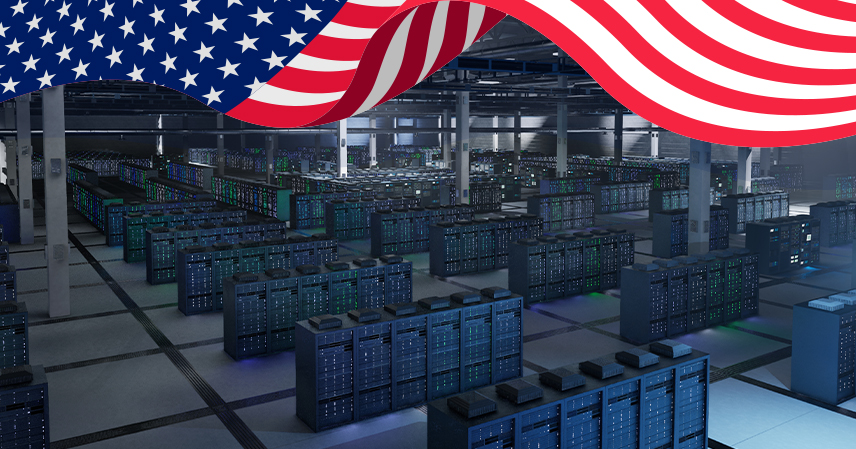
If you have searched anything about AI in the news lately, you’ve probably seen the term “data center” attached to words like moratorium, blackout, or backlash. That’s a shift. Data centers used to be a quiet, mostly welcomed part of local economic development. Now they are one of the most contested infrastructure issues in the US, showing up in city council meetings, state legislatures, and even 2026 midterm campaign ads.
This piece isn’t here to tell you data centers are good or bad. It’s here to explain what they are, why the fight is happening now, and what’s genuinely true on each side, so you can follow the debate in your own state without having to sort through the spin yourself.
What a data center actually is
Strip away the buzzwords and a data center is a building full of computers, specifically, servers, that store data and run the software behind the internet services you use every day. When you save a file to cloud storage, ask an AI model a question, or stream a video, that request travels to a data center, gets processed, and the result travels back to your device.
What has changed is the scale and the hardware. Traditional data centers ran fairly modest, energy-efficient servers built for storage and web traffic. The newer wave, built to train and run AI models, uses specialized chips called GPUs (Graphics Processing Unit) that draw far more electricity per rack and produce far more heat, which means more cooling. A single large AI data center campus can use as much power as a mid-sized city, and that single fact is the root of almost everything happening in state legislatures right now.
Why the boom is happening now
The short version: AI demand exploded faster than the power grid, water systems, and local zoning rules were built to handle. Tech companies need enormous, reliable computing capacity to train and run AI models, and building physical data centers is currently the only way to get it. That has triggered a nationwide construction wave, often in states offering cheap land, tax breaks, and access to power.
The case for data centers
Supporters, usually the companies building them, along with some state and local officials point to a few real benefits:
- Tax revenue. A single large facility can generate significant property and corporate tax revenue for a county or state, sometimes exceeding what previous industries provided.
- Construction jobs. Building a data center campus employs hundreds of construction workers, though usually for a limited multi-year window.
- Digital infrastructure. Without this physical buildout, the cloud services, AI tools, and streaming platforms people rely on daily simply can’t scale.
- Grid modernization side effects. In some cases, utilities have used data center demand to justify grid and transmission upgrades that arguably benefit the wider region too.
Where this gets contested: once a facility is built, it typically employs far fewer permanent workers than the construction phase suggested, often in the dozens, not hundreds. Critics say incentive packages were sometimes sold to the public using construction-era job numbers rather than long-term staffing figures.
The case against, as critics present it
Opposition has grown sharply in the past year, and it cuts across party lines. The concerns being raised most often in state legislatures and public hearings are:
- Electricity costs. Data centers can require so much new grid capacity that utilities pass the cost of new power plants and transmission lines on to everyday ratepayers, not just the companies causing the demand.
- Water use. Cooling large server farms often requires significant water, which matters more in drought-prone regions.
- Land use and noise. Backup diesel generators, cooling systems, and large footprints have drawn complaints in residential and rural areas alike.
- Air quality. Regulators have flagged that multiple facilities running backup generators simultaneously during grid stress could concentrate emissions in one area.
- Tax incentive skepticism. Some states that once competed to attract data centers with generous tax breaks are now reconsidering, arguing the long-term return doesn’t match the upfront cost to the public.
The policy fight, state by state
This is where things have moved fastest. In just the first few weeks of 2026, more than 300 data center-related bills were filed across over 30 states, building on 200-plus bills the year before. That volume signals a real shift: states that once competed to attract data centers with incentives are now writing rules to manage them.
The legislation generally falls into a few buckets:
- Moratoriums. Roughly a dozen states have introduced bills to pause new construction, usually to give regulators time to study grid, water, and community impact before more projects get approved.
- Ratepayer protection. A growing number of states are creating separate electricity rate classes for data centers, requiring them to cover the true cost of the power they use instead of spreading it across residential bills.
- Water disclosure. States are increasingly requiring data centers to report and manage water consumption, following early movers like Minnesota.
- Incentive rollback. States that once offered generous tax breaks to attract facilities are now reducing or eliminating them as construction costs and public pushback grow.
At the federal level, the current trump administration has pushed executive orders aimed at speeding up permitting and environmental review for AI data centers, treating fast buildout as a national competitiveness priority. But those orders don’t override state control over land use, zoning, and utility rate-setting, which is exactly where most of the pushback is happening. The result is a two-track system: federal policy encouraging faster growth, and state policy increasingly slowing it down or attaching conditions to it.
Federal regulators are also involved on the grid side. The Federal Energy Regulatory Commission has set an accelerated timeline for regional grid operators to address the strain large data center loads are putting on the power system, with major grid operators like PJM Interconnection, which covers a large swath of the mid-Atlantic and Midwest under the most pressure.
Why this has become a political issue
Data centers have moved from a niche zoning topic to a genuine 2026 midterm issue. Polling shows public opinion has shifted from cautiously positive to largely negative, driven mostly by concern over electricity rates. Candidates from both parties have grown noticeably more critical in their public messaging over the past two years, tying data center growth to the broader affordability conversation voters are already focused on.
What to actually watch for
If you want to follow this responsibly rather than just absorb headlines, a few things are worth tracking in your own state or region:
- Whether your state has introduced a “large load tariff” or similar rate class. This determines whether data centers or residential customers absorb new grid costs.
- Whether local moratorium proposals are aimed at pausing all construction or just requiring more disclosure before approval. These get treated very differently in the debate but are often conflated.
- How your utility is justifying new power plant construction, and whether data center demand is the stated reason.
Data centers aren’t going away; they’re the physical backbone behind the AI tools and cloud services that are now part of daily life. But how the costs and benefits get distributed between tech companies and everyday ratepayers is still very much being decided, state legislature by state legislature. That’s not a settled story yet, and it’s worth watching with clear eyes rather than picking a side before you’ve seen the numbers for your own area.