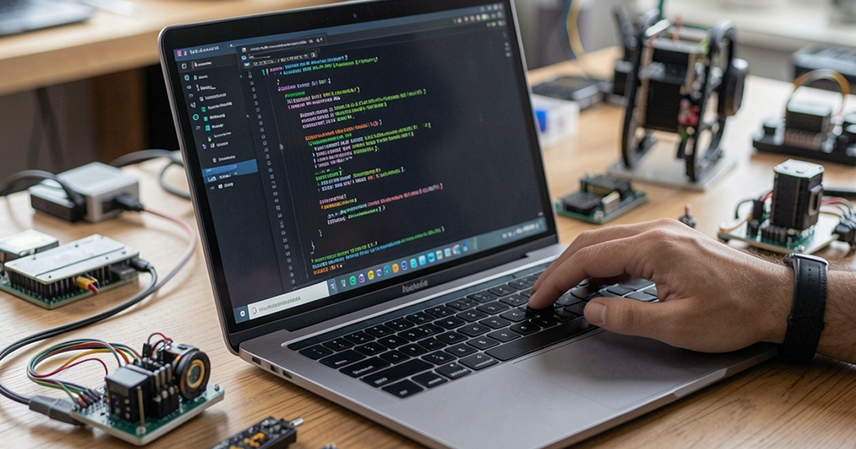
If you’ve been learning tech but still feel stuck, the issue usually isn’t effort; it’s approach. Most beginners spend a lot of time consuming content. They watch tutorials, read guides, and follow along step by step. It feels productive in the moment because you understand what’s happening. But when it’s time to build something on your own, that understanding often disappears.
That gap is where most people lose confidence. The difference is simple: tutorials show you what to do, but projects force you to figure things out. And that process of figuring things out is what actually builds skill. If you want to make real progress, you have to shift from learning passively to building actively. Your first project is where that shift begins.
Why Tutorials Alone Don’t Move You Forward
There’s nothing wrong with tutorials. In fact, they are useful for getting familiar with tools and concepts. The problem is relying on them for too long. When you follow a tutorial, you’re operating in a controlled environment. Every step is already decided for you. You don’t have to think about what to do next, and you don’t have to deal with uncertainty. That makes the experience feel smooth, but it also removes the most important part of learning.
Real progress happens when things are unclear. When you don’t know what to do next, when something breaks, or when you have to decide without guidance, that’s when your understanding deepens. This is why many beginners feel like they’re “almost there” but never quite ready. They’ve learned how to follow instructions, but not how to build independently.
If you’re still deciding what direction to go in, it helps to simplify your focus first. A clear starting point, like the one outlined in Which Tech Skill Should You Learn?, makes it much easier to apply what you learn.
What Your First Project Should Actually Be
Your first project doesn’t need to be impressive. It doesn’t need to be complex, and it definitely doesn’t need to be perfect. What matters is that it’s something you can complete on your own, even if you struggle along the way.
A good beginner project is small enough to manage but meaningful enough to require thinking. It should have a clear purpose, even if that purpose is simple. For example, building a basic webpage, analyzing a small dataset, or designing a simple interface is more than enough.
The goal is not to build something that stands out but to build something that forces you to engage. That engagement is what turns passive knowledge into real skill.
Choosing a Project Based on Your Path
The type of project you choose depends on the path you’ve decided to follow, but the principle remains the same: keep it simple and focused.
If you’re in web or software development, your first project might be a basic website or a small application with limited functionality. If you’re leaning toward design, creating a clean and thoughtful interface for a simple app is a strong starting point. For those interested in data, working with a small dataset and turning it into a clear visualization can be incredibly valuable.
In areas like AI or machine learning, starting with a simple model (even one that feels basic) can help you understand how systems actually work. And if you’re exploring cybersecurity or cloud, small practical setups or experiments are far more useful than just reading about concepts.
No matter the path, the objective is the same: build something you understand. If you’re using AI tools during this process, make sure they’re helping you think rather than thinking for you. A more effective way to approach this is outlined in How to Use AI to Learn Tech Skills Faster, where the focus is on learning with intention.
How to Approach Your First Project
Starting is often the hardest part, not because the work is difficult, but because it feels unclear. The key is to reduce that uncertainty. Begin by choosing a simple idea and defining what success looks like. This doesn’t have to be detailed. A single sentence is enough, as long as you know what you’re trying to create.
From there, break the project into smaller steps. Instead of thinking about the entire build, focus on the next action. This could be setting up your environment, creating a basic layout, or writing your first line of code.
As you start building, you’ll run into problems. That’s expected. In fact, it’s necessary. Each obstacle forces you to search, test, and adjust your approach. Over time, this process becomes easier because you’re learning how to think, not just what to do.
If you need a reference for simplifying complex ideas, the approach used in How the Internet Works is a good example. Breaking things down into manageable parts is a skill you’ll use repeatedly. The most important part of this process is finishing. Even if your project isn’t polished, completing it builds confidence and gives you something tangible to build on.
Where Most Beginners Go Wrong
The biggest mistake is trying to do too much too soon. It’s easy to get inspired and aim for something ambitious, but that usually leads to frustration.
Another common issue is quitting too early. When things get difficult, the instinct is to go back to tutorials or switch to something else. While that might feel productive, it resets your progress instead of moving it forward.
There’s also the tendency to rely too heavily on copying. Looking up solutions is part of the process, but understanding those solutions is what matters. Without that step, the learning doesn’t stick.
Why Your First Project Matters More Than You Think
Your first project is more than just practice. It’s the beginning of your portfolio, your proof of work, and your entry point into real opportunities.
When you eventually apply for internships, freelance work, or entry-level roles, what you’ve built will matter far more than what you’ve studied. Projects show that you can take an idea and turn it into something functional. That transition from learning to building is what separates beginners who stay stuck from those who move forward.
If your goal is to turn your skills into real opportunities, the next step is understanding how to position your work. That process is covered in Start a Career in Tech With No Experience, where the focus shifts from learning to applying.
A Better Way to Learn Going Forward
Instead of waiting until you feel ready, build as you learn. Take a small concept, apply it immediately, and let that application guide your next step. This creates a feedback loop where each project improves your understanding, and each challenge strengthens your problem-solving ability.
Over time, this approach compounds. What once felt difficult becomes familiar, and what once felt confusing becomes manageable.
Final Thoughts
Your first project won’t be perfect, and it doesn’t need to be. What matters is that you start, struggle, and finish. That process will teach you more than any tutorial ever could.
If you want to move forward in tech, don’t wait for more information. Use what you already know and build something with it. That’s where real progress begins.